Explore the thousand-year-old lineage of Dhokra and Bastar ironwork. A technical deep-dive into the carbon-neutral, artisan-led methods that define every piece in our collection.
Dhokra casting is one of the oldest known methods of metal casting, practiced in India for over 4,000 years. It is a non-ferrous metal casting using the lost-wax casting technique.
Step 01
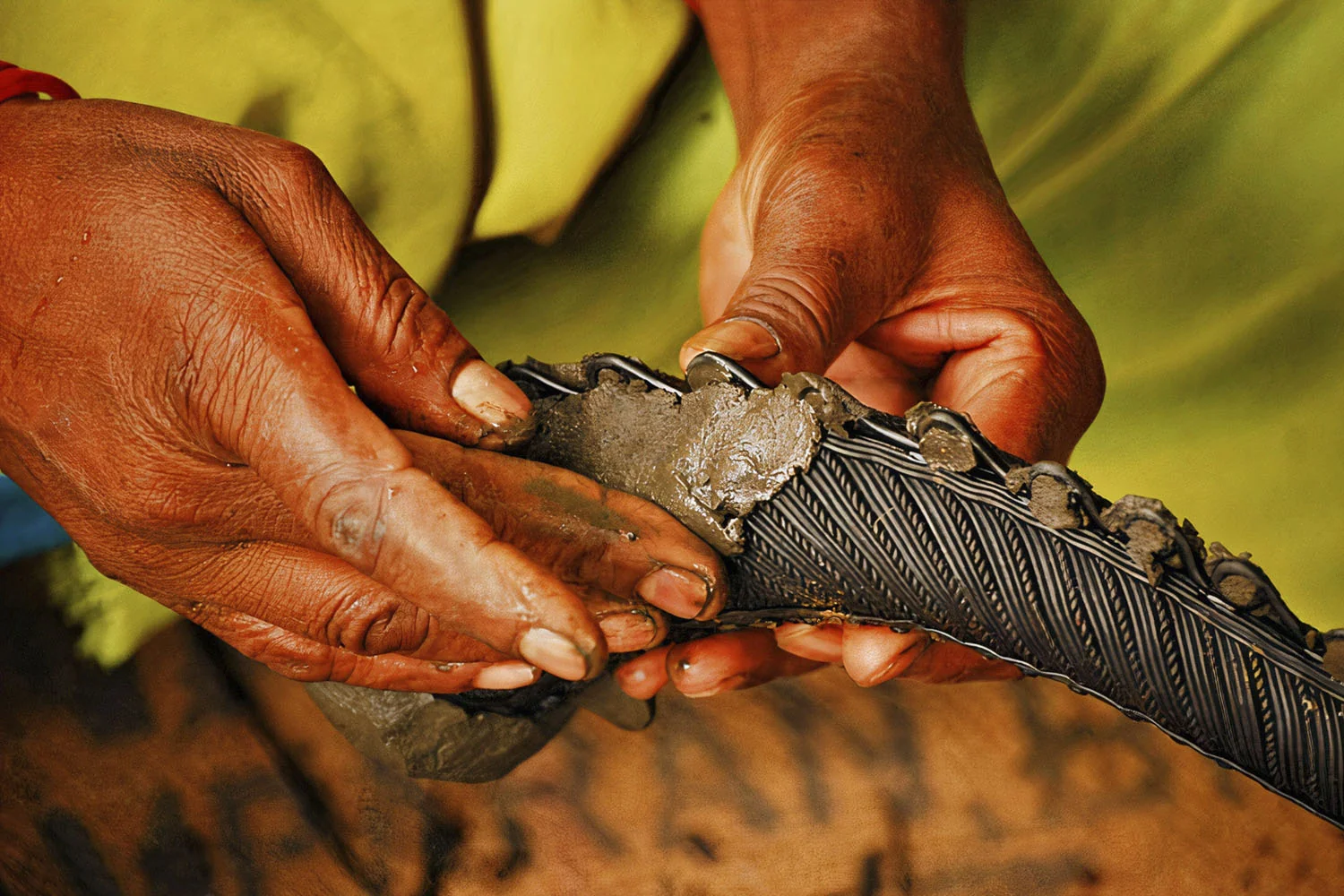
Artisans shape a sun-dried clay core, then hand-wrap intricate beeswax coils over the surface to define the final pattern.
Step 02
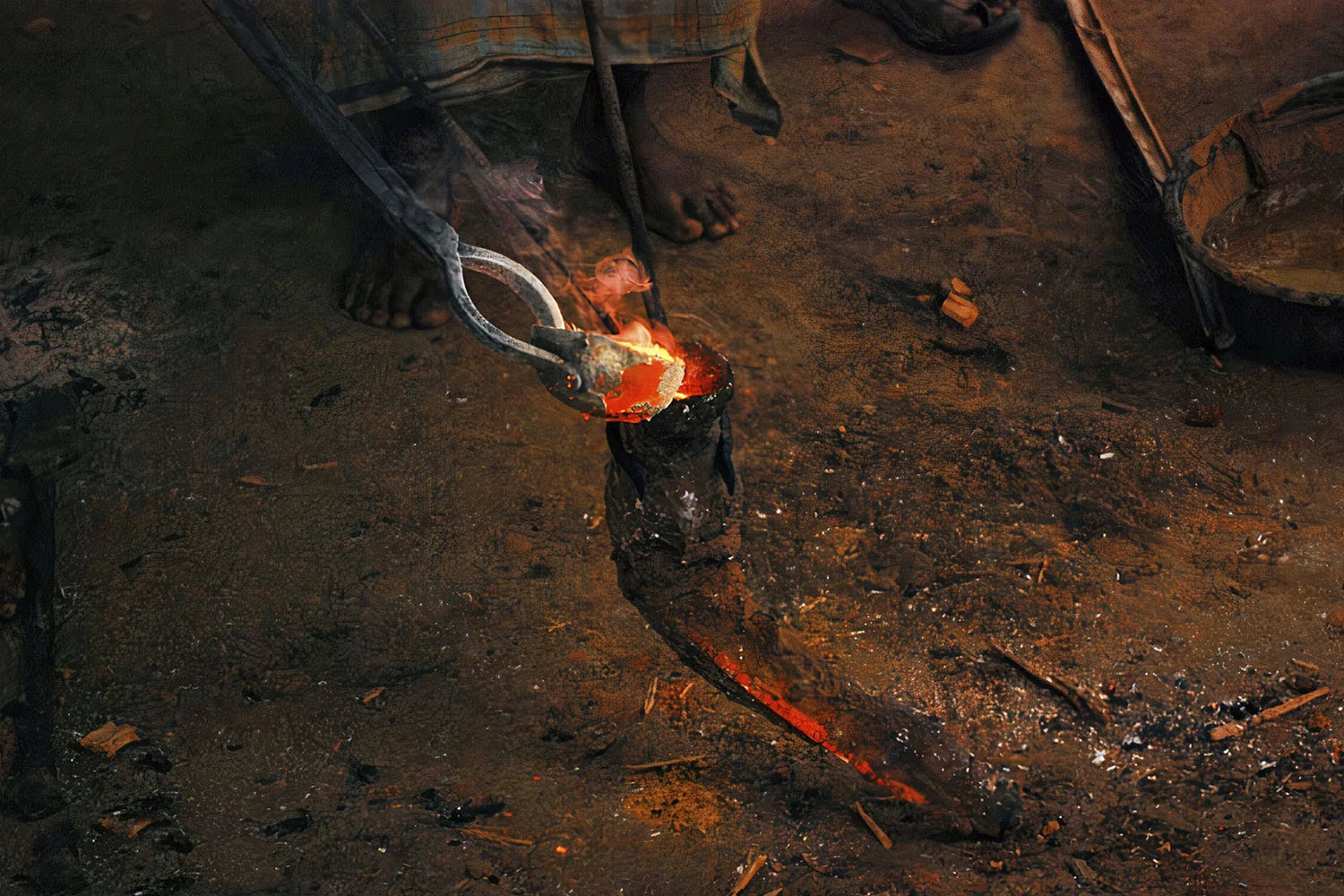
The wax melts away as molten metal is poured into the clay mould, filling the cavity to take the exact shape of the lost wax.
Step 03
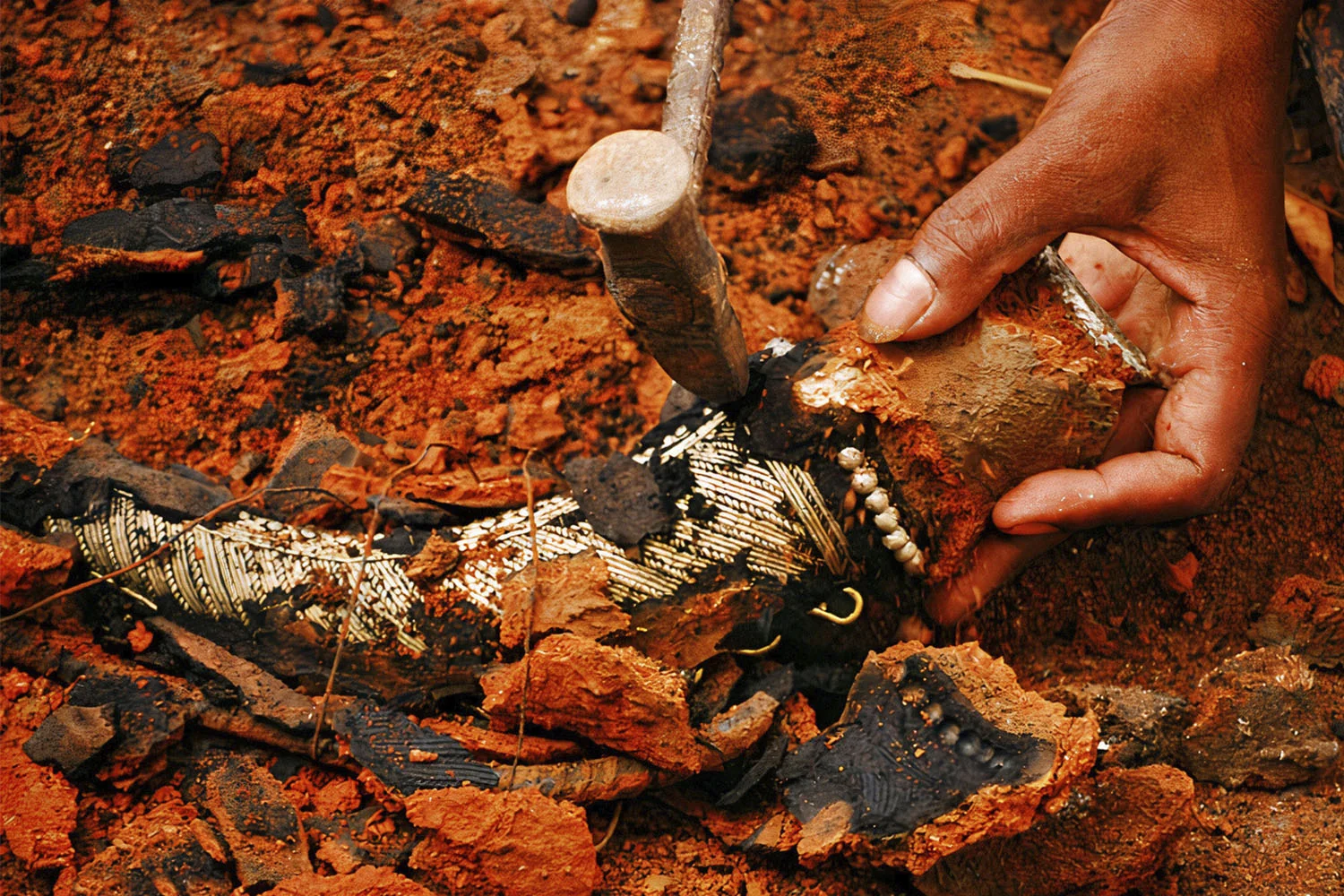
The mould is broken to reveal a unique artifact. Final polishing highlights the golden bronze against the charcoal patina.
The process utilizes recycled scrap metals and locally sourced clay. No industrial furnaces are used; heat is generated by sustainable fires.
By removing intermediaries, AND ensures that most of the artifact value returns directly to the Bastar tribal guilds.
Each piece is registered with an individual fingerprint, documenting the specific artisan family and the date of production.
Technical Note
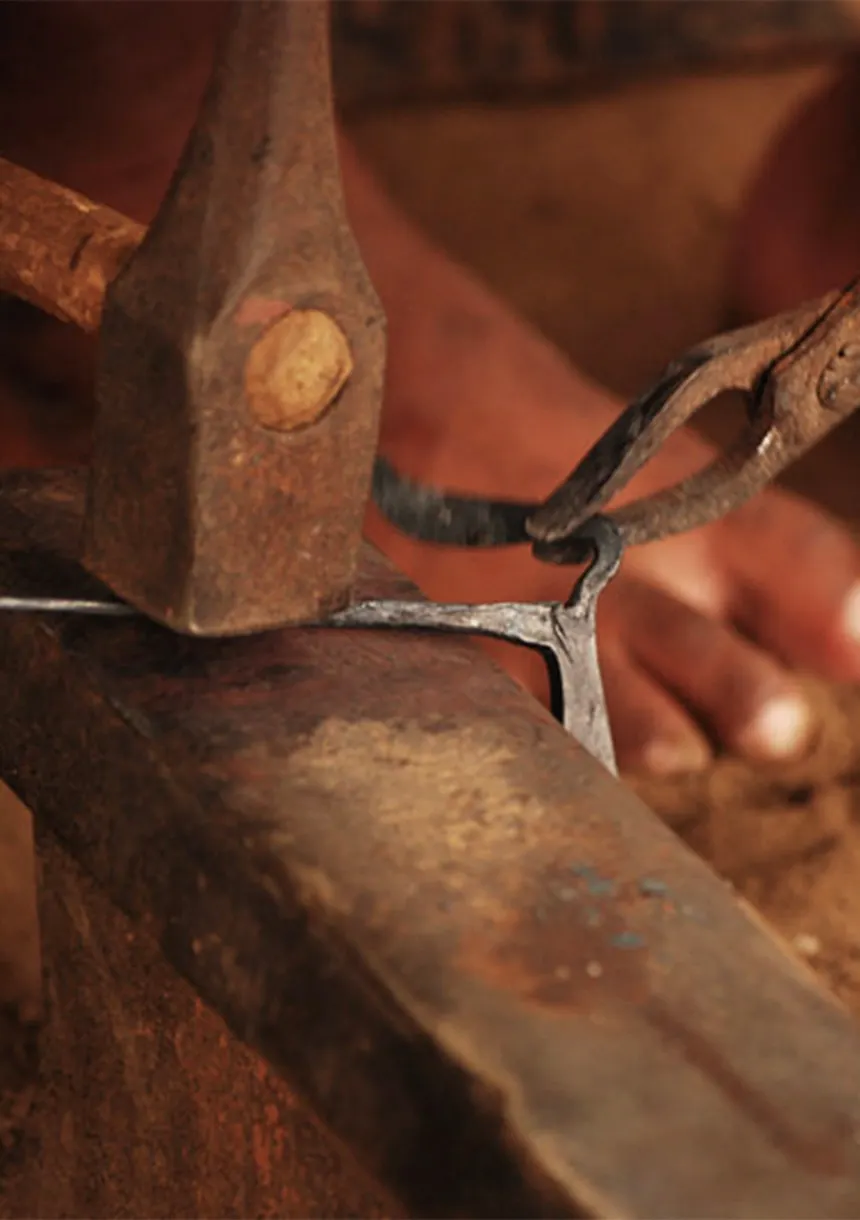
Unlike cast Dhokra, Bastar iron craft is born of direct force. Each form is hammered from raw iron ore into minimalist, contemporary silhouettes.
Explore Iron Collection
"The iron is tempered in natural spring water, giving it a distinct dark patina that resists oxidation."
"Bastar artisans work by eye; asymmetry is a deliberate marker of the human hand."
"Recommended for high-traffic luxury residential projects. Its texture offers a sensory grounding element."