The Iron Archive
Bastar Iron
Lohshilp Heritage
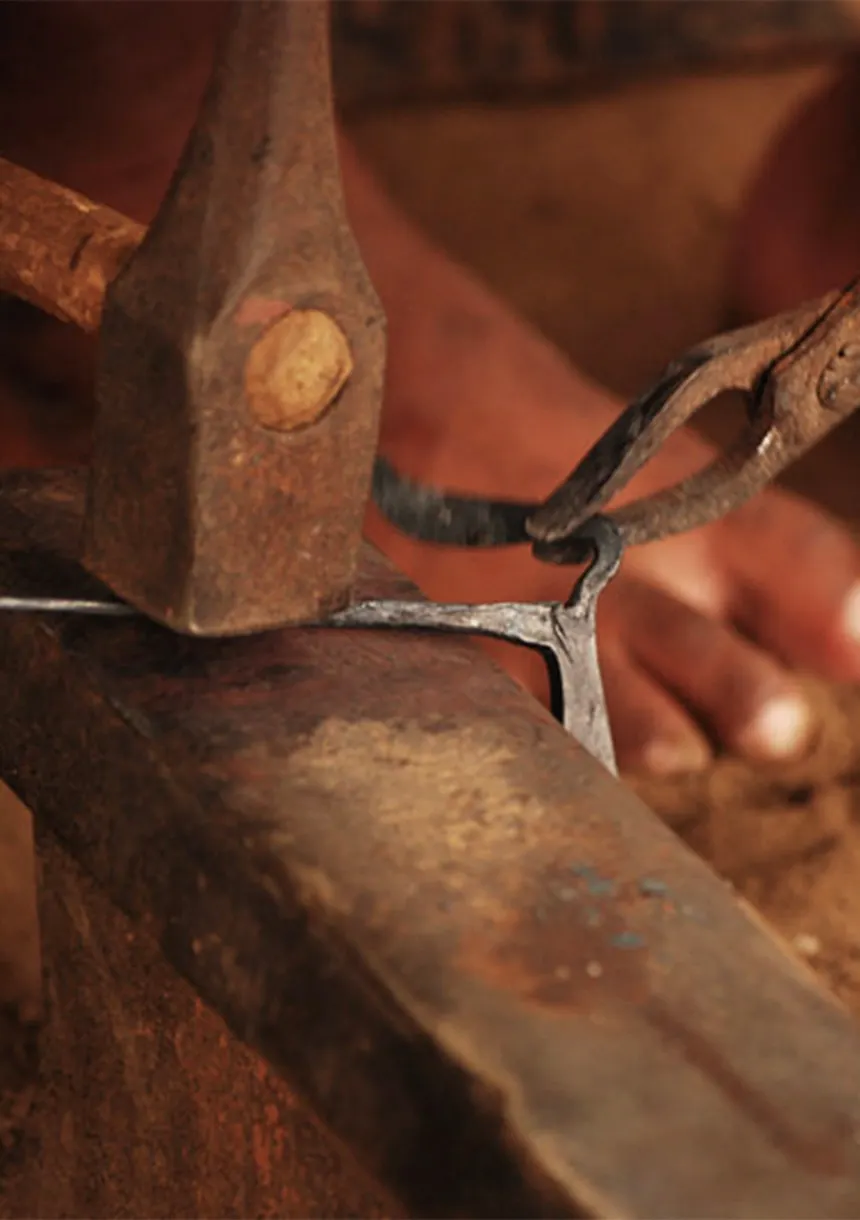
Hand-forged stories of molten strength. Each piece is a dialogue between the artisan's hammer and the spirit of the Chhattisgarh forests.
The Iron Archive
Hand-forged stories of molten strength. Each piece is a dialogue between the artisan's hammer and the spirit of the Chhattisgarh forests.
The Lohshilp tradition represents a peak of Indian tribal metalwork. Using discarded iron scrap and traditional bellows, artisans forge figures that populate the pantheon of tribal myth—warriors, musicians, and deities—each possessing a jagged, raw energy that honors the 'AND' philosophy: Art & Decor in its purest form.
Art & Decor (AND)
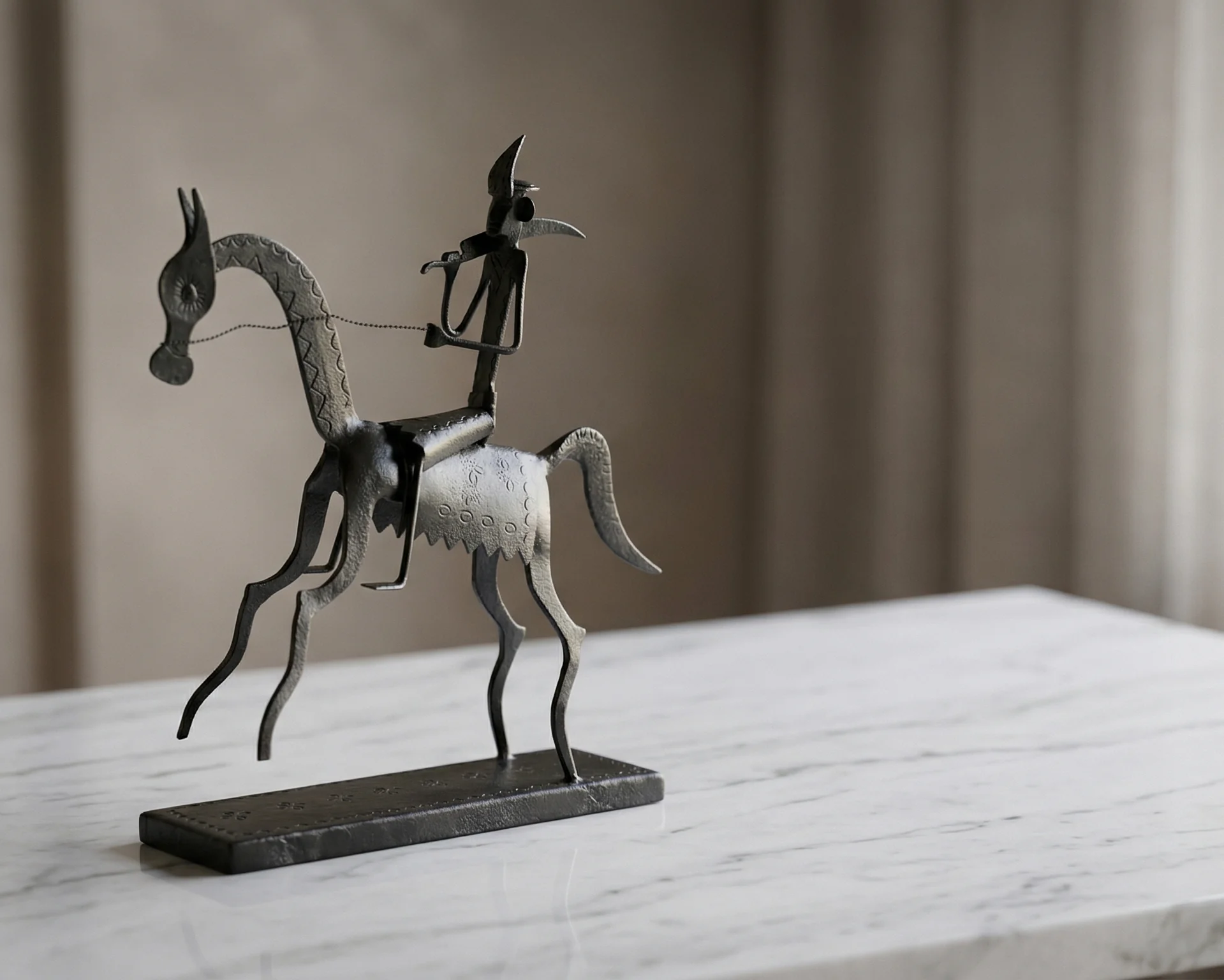
In Bastar lore, the Horse Rider represents the protective deity 'Anga Deo'. These figures were historically placed at village boundaries to ward off malevolent spirits, characterized by their proud posture and elongated skeletal frame, forged to endure eternity.
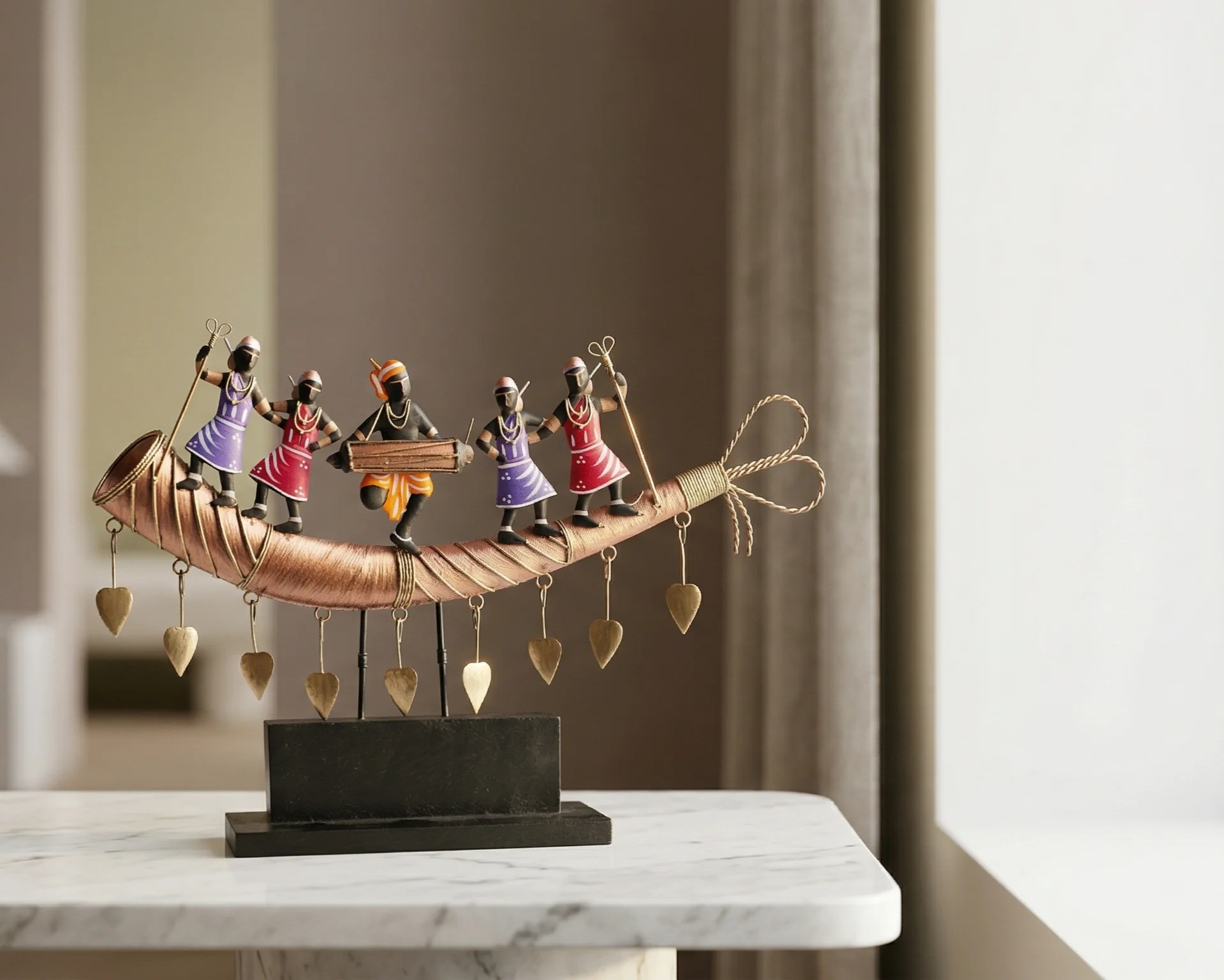
Celebrating the harvest festival, this piece captures the gravity-defying balance of a dancer poised atop a ritual brass trumpet. It symbolizes the harmony between celebration and sound, where the iron becomes as light as a melody, echoing the vibrancy of tribal festivities.
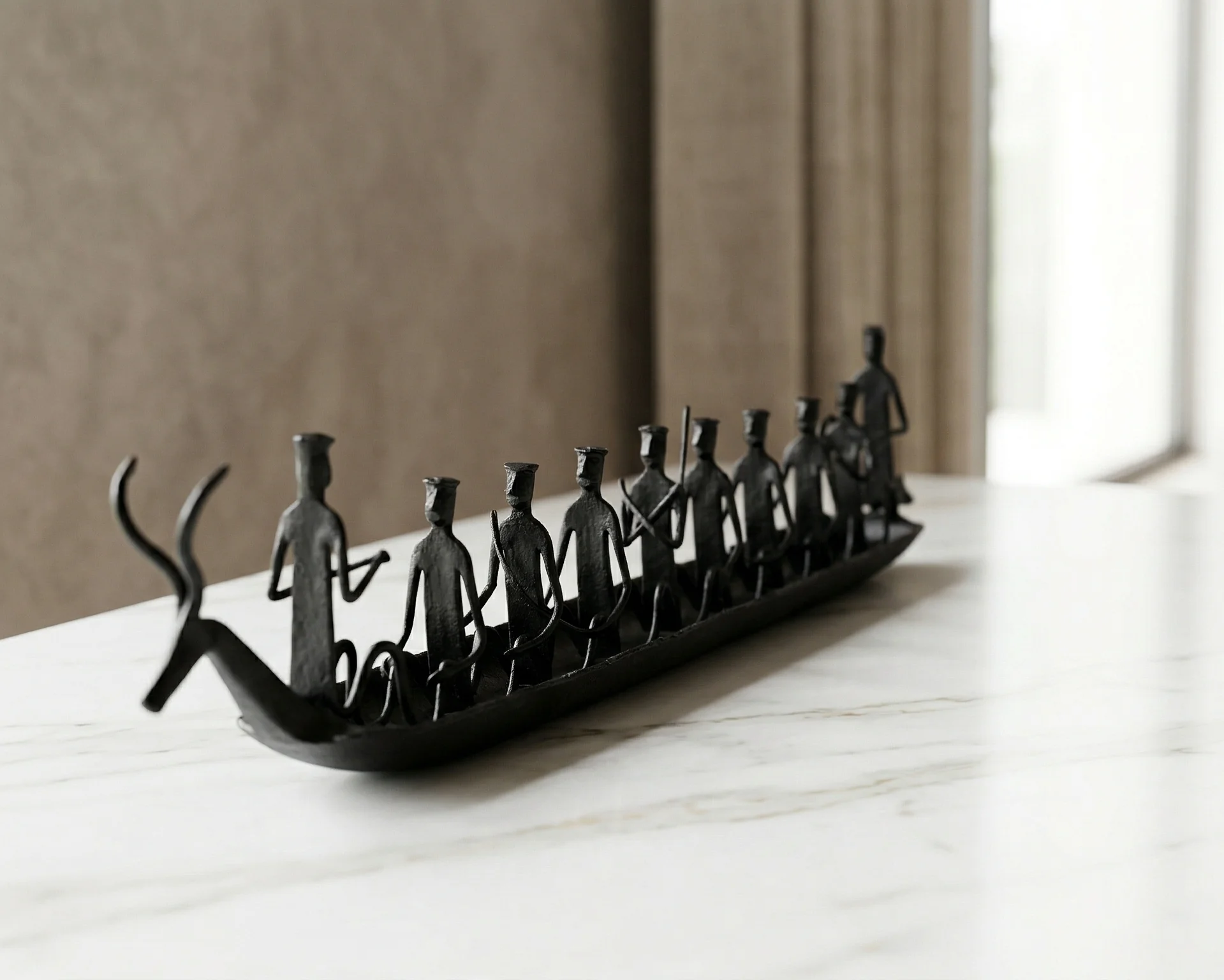
The river is the lifeblood of the forest. This long-boat sculpture depicts collective endeavor, featuring synchronized rowers that symbolize community strength and the journey across spiritual waters, a testament to tribal unity and the shared path of the ancestors.
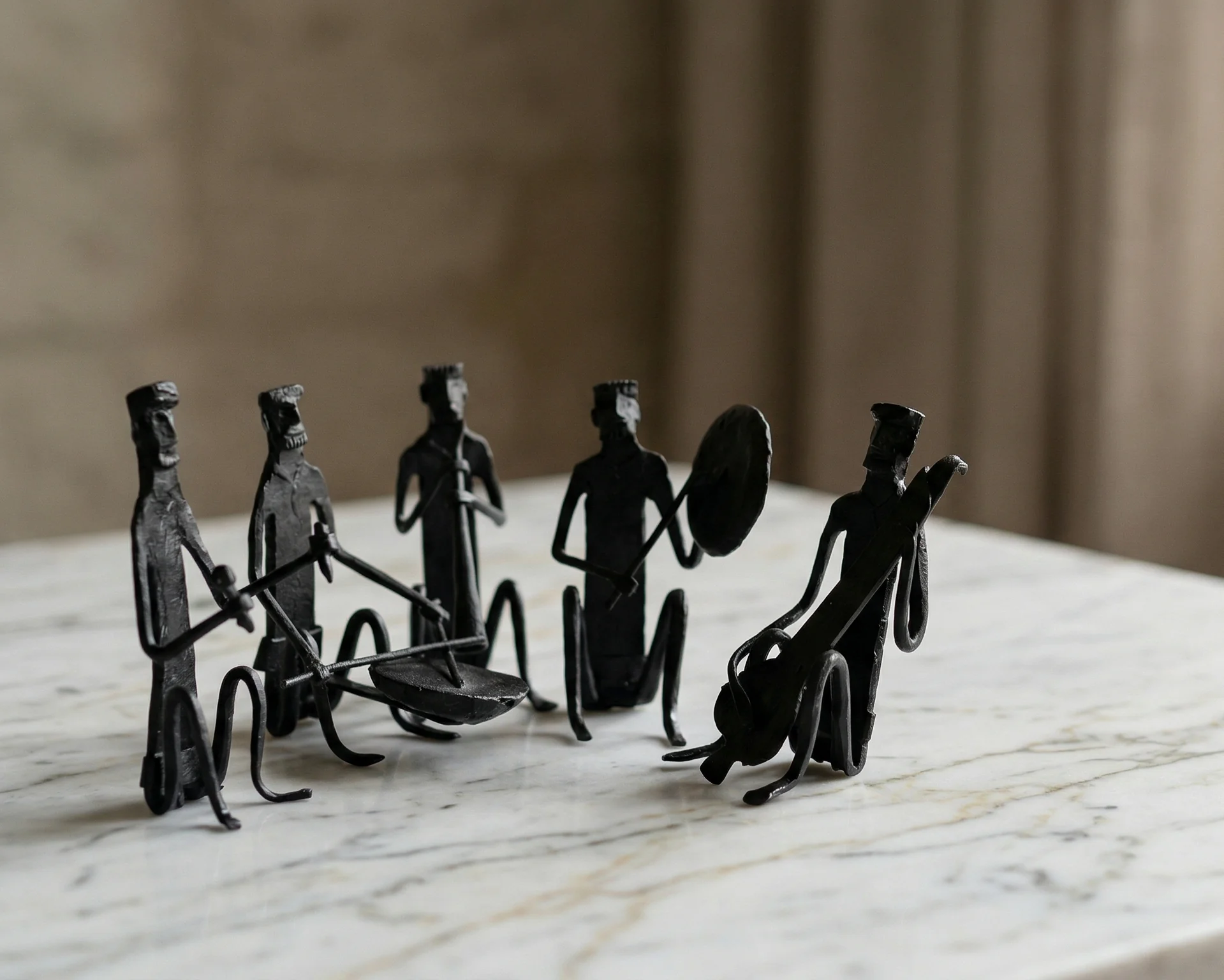
A trio of rhythm. Each figure is hand beaten to reflect the dynamic energy of the Maria tribal drummers. The iron retains the scars of the forge, echoing the primal beats of the 'Mandari' drum and the songs of the ancestors that resonate through the Indravati valley.
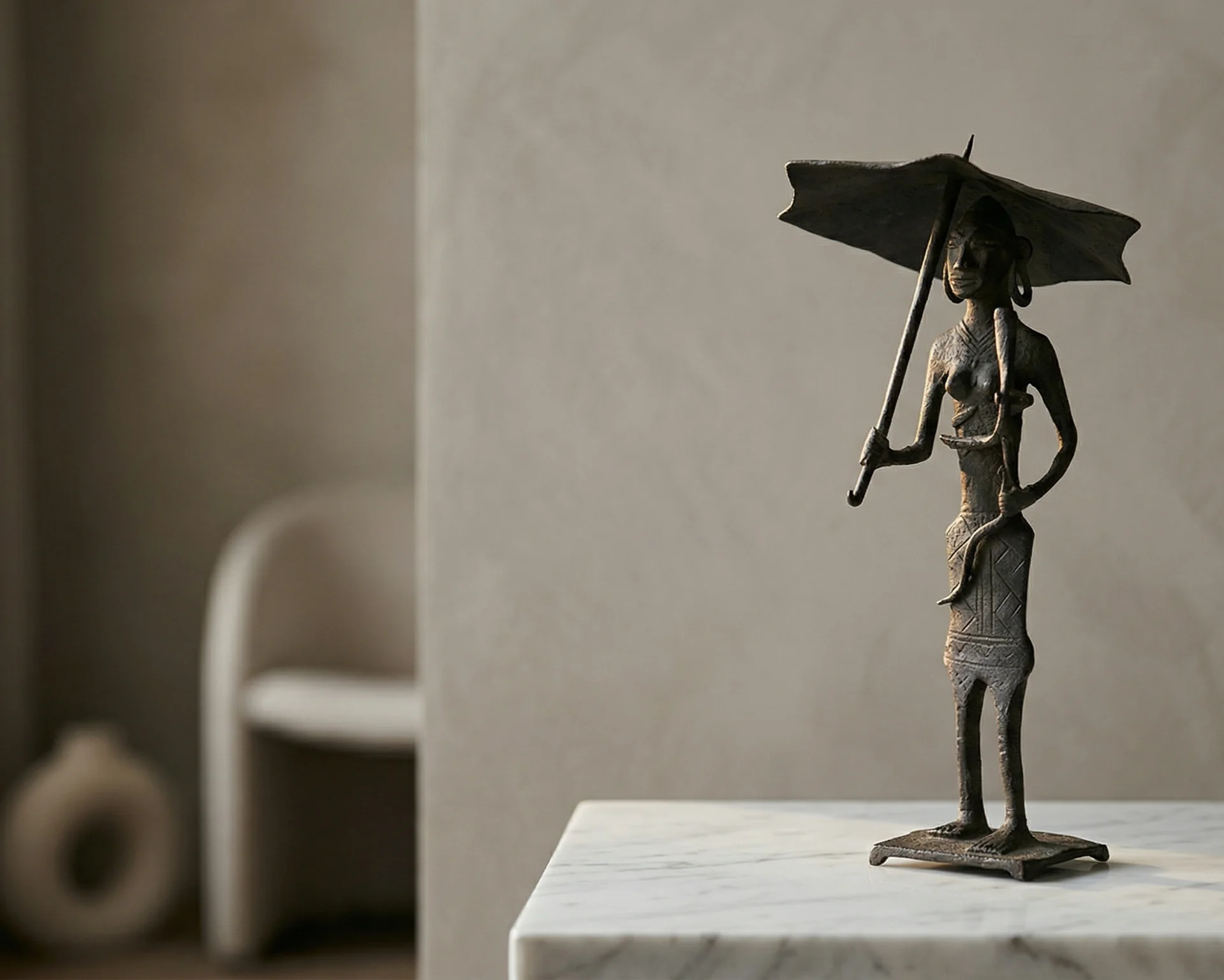
The iron umbrella is a sign of nobility and divine grace. This sculpture portrays the dignity of a tribal matriarch, with the umbrella's intricate filigree casting delicate patterns of shadow, juxtaposed against her solid form of strength, embodying the resilience and elegance of Bastar's women.